King Edwy - King Edgar - Outlawe - Dunstan
Harold
II - An
outlaw bears a wolf's head
Outlawe Timeline
- Isle of Ely - History
The Wolf was a respected animal
to the Anglo-Saxons,
it symbolizes loyalty, power and freedom
Útlagi
placed this stone in memory of Sveinn -Rune sm103 - Småland,
Sweden
Utlage
raised this stone in memory of Eyvindr, a very good thegn - Rune
vg62, Ballstorp, Västergötland, Sweden
Wuffing - King St.
Edmund - Patron Saint of England - The last of the Wuffings, St Edmund.
"Wuffings" - Wolf people 'the kin'
(children or descendants) of the wolf'
.
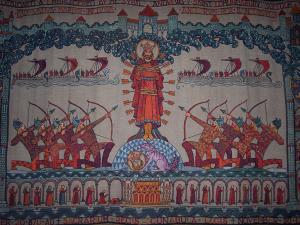
He was tied to a tree, tortured by being shot through with arrows, and
then beheaded. 20 November 869 at Hoxne in High Suffolk and his body
was buried in a small wooden chapel nearby.
From
"A
visitation of the seats and arms of the noblemen and gentleman of Great
Britain by Bernard Burke" it says
;
"The Outlaws derive their descent from a family who were
banished to Ireland by King Edwy, for political offences "
[See: Was the
Outlawe's banishment associated
with Saint Dunstan? (patron Saint of Goldsmiths)]
or Earl Harold? Ireland
was at that time overrun by wolves, and they redeemed the liberty of
returning the next year, when King Edgar reigned, by sending in so
many wolves' heads to the government. They were also able to prove
their innocence of the crime imputed to them ; and, ever since, their arms
have been, argent, a saltier gules, between four wolves' heads, couped,
proper; but so indignant were they at their unjust condemnation that
they determined to retain the name of Outlawe, in order, as they said, to
cast obloquy on the unjust monarch who banished them.
Symbolic Meaning of the
Outlaw Arms and Crest
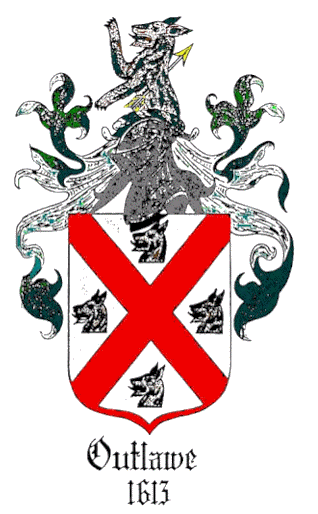
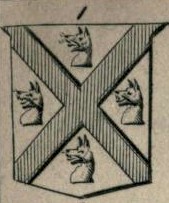
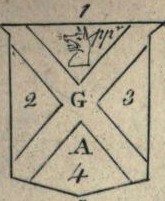
ARMS Argent a saltire gules between four wolves' heads couped proper.
CREST
A
demi-wolf proper wounded in the shoulder by an arrow or head and
feathers argent embrued gules. (British Museum-Stowe).
Ancient Translations:
ARMS Silver: a red saltire between four wolve's heads severed and in natural color.
CREST One half a wolf couped proper pierced through the side with a gold
arrow, feathered and headed in silver. the arrow lying bent to the right.
Heraldry
link Arms: On a saltire, between four wolves' heads couped, a crescent
(Outlaw of Little Witchingham, co. Norfolk, granted 1613, Argent, a
saltire gules between four wolves' heads, couped proper.)
Crest: A
demi-wolf, pierced through the side with an arrow, feathered and headed,
the arrow lying sinister bend ways (Outlaw, A demi-wolf proper, pierced
through the side with an arrow or, feathered and headed argent, the arrow
lying sinister bendways.) College of Arms
is the official repository of the coats of arms and pedigrees of English,
Welsh, Northern Irish and Commonwealth families and their descendants.
700~1000AD - Útlagi
placed this stone in memory of Sveinn -Rune sm103 - Småland,
Sweden
990~1010AD - Utlage
raised this stone in memory of Öjvind, a very good thegn -
Rune vg62 - Ballstorp, Västergötland, Sweden
All
the places in Hichin which were not in Harold's hands in 1066 were
held BY HIS 'MEN'
1023 - Gilbert
Egghlan de Utlag et Bargaria
- Keighley West Riding Yorkshire
1070 - Utlamhe
with Hereward the Wake
1150~1169 - Charter
of Bartholomew de Glanville To Bromholme Priory - Walteri
Utlage - Bromholm Priory
1171 - The people of
Bristol were given Dublin as a colony by the king and many Bristolians
settled there
1172 - Torsten utlag
- Reginaldus utlag - Dublin Roll of Names
1175 - Treaty
of Windsor -
Henry II became the High King of Ireland. This Treaty resulted in large scale emigration from England to Ireland
1180~1202 - Margam
Abbey - John, son of Ralph Utlage, the meadow of
Leowine, Lewin's-mead, St. James' - Bristol
1180-1199 - Torsten
Utlag - Burgess - Dublin Ireland
Early Outlawe's in Kent
Hagenild Mother of the Outlaw's
1198 - Philip
, Henry , Richard , William , Jordan,
sons of Vtlag’ - Kent Pipe Rolls - John 1198
1199 -
IBER
FEODORUM - Alan Utlage, Quarter fee in Hindringham and Homeresfeld
- Norfolk - Robert Utlag
1200~1212
- De Helia Vtlagh
(of Elham)
- Rents due about Mildelton - (Milton
Kent) (Elham
Canterbury, Kent)
1200~1212
- Haghenild
Vtlaghe - lands of Newton and Newington -
Heirs: Hildith , Simon, Adam, Henry and Roger son of Thomas
- ( Canterbury, Kent )
1200-1250 -
Deed
of grant, Lynn - 1d annual rent from a certain [piece of land] 4 feet wide
in Damgate held by Peter Strac -
Grant by Laurence Outlaw (utlator) of Len
[Lynn] to the Hospital of the Blessed Mary Magdalen of Len and to
the infirm brothers there for the souls of his parents and his
benefactors, the 1d to come from his purse during his lifetime
1207 - Hubert
de Burgh purchased of Roger de Burnham and Julian, his wife, William
de Noiers, Robert Fitz Ralph, and Alice his wife, and Robert
de Utlagh, their several nine parts of two knights fees in Runton and
Beeston and Hinderingham, for which they paid castle gaurd to Dover. 9th
of King John * The
Norfolk antiquarian miscellany - West
Runton - Beeston
Regis - Hindringham
- "Hindringham
Outlagh Manor"
1207
- Alan
the son of Robert de Vtlage,
1210 - Roger
Utlag - Witness - Steeple Bumpstead Essex - Sir
Robert de Vere - Gilbert de Baillol - William de Watevill - Knights of
St John
1218 - Alan
le Ultage
-. Winchester. Suffolk
1225 - Warin
le Utlage- land in Swanton and Hoe- Norfolk
1228 - Warin
le Utlagh v. Thomas de Hereford, in Swanetun.
1230 - Alan
le Utlage - county of Essex
1230 - Peter
le Utlage - ship license - Dieppe Normandy
1240 - Warin le Utlag
in Qeywode. (Bishop of Norwich)
1250 - Willelmum le Utlag - Close Rolls,
Henry III
1260 - Richard le
Utlawe - Grant of Rent
William de Wateville to John de Vallibus land in Hempstead,
Essex
1270 - Hugo le Utlagh - Close Rolls,
Henry III
1273 - Richard
Utlawe, County Bedford, Hundred Rolls.
1282 - The
death of John Utlagh, Lancaster
1285 - Charter
of
Ida daughter
of the late Richard Utlaw
- five acres of land and
half an acre of meadow, with appurtenances.
- Roger
[ son of Richard ] Outlaw
( of Bumpstead Helion ), Ida daughter of Richard ( Hospitallers
Cart. Maplestead Essex)
1288 - Thomas
Utlagh - Close Rolls, Edward I
1296 - Willmo le Utlagh
- Sussex : Arundel
1313 - Willielmus Outlagh
- Bristollia Bristol
1314 - John
Outlawe
v. Henry le Pescour of Cantebrigg' & Joan his wife in Gransete - Cambridge-
7 Edw II. 79
1317 - Simon
de Everesdon and Margaret his wife v. John le Utlawe junior and
Alice his wife in Brunne - Cambridge * 10 Edw II 83 ( Brunne
Cambridge (Bourne,
Lincoln) )
1326 - Suffolk
manor of Lakenheath
- Matthew Outlawe - Matthew
Outlawe of Lakenheath
Outlawe Family History in Ireland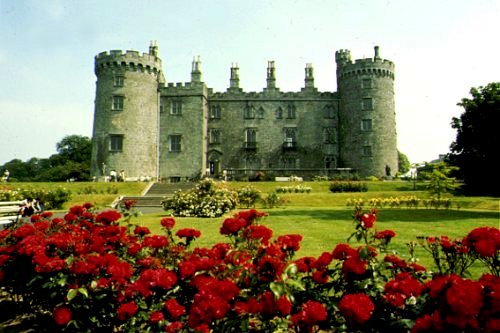 Kilkenny Castle
 1180-1199 - Torsten
Utlag - Burgess - Dublin Ireland
1279 - Rochester
- Protection for David de Pembrok, and Cecilia la Utlaghe
(from Ireland)
1298 - Dame
Alice Kyteler marries William Outlawe brother
of Sir Roger Outlawe, Chancellor of all Ireland
Her family came to Ireland after the Norman conquest of 1169
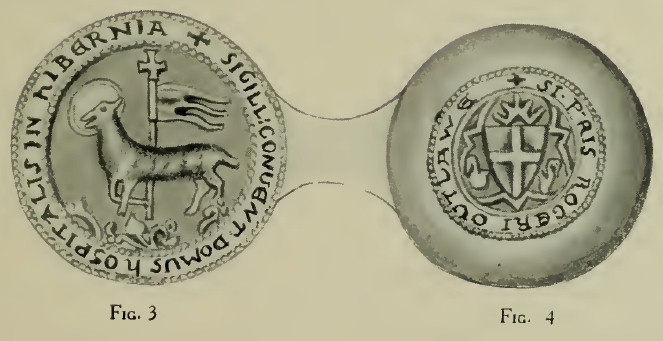
Roger Outlawe Seal - 1318 -
pg197
The
Knights Hospitaller - Knight-brothers
of the order had to
be a knight or son of a knight and born legitimately of a noble
family
1311-1340
- Sir
Roger Outlawe - The Grand Prior - Hospital Of Saint John Of Jerusalem
In Ireland - Priory of Kilmainham - Lord Justice of Ireland
1324
- Dame
Alice Kyteler was
charged with heretical sorcery escapes to England with help from
Brother-in-law Sir Roger Outlawe
1324 - William
Outlawe
nephew of Sir Roger Outlaw is ordered to make pilgrimage to the
Shrine of St. Thomas at Canterbury
1324 - Summons
to the war in Aquitane - William Utlawe
of Kilkenny - War
of Saint-Sardos
1326 - William fitz Maurice
marries Margaret Outlawe daughter of William Outlawe, the banker of Kilkenny
- Williaim fitz Maurice, son of Maurice fitz
Maurice, succeeds his father, services due to Richard de Clare, Earl of Gloucester and Hertford in the county
Kilkenny,
- later known as the " Maurice Fitgerald 's "
1330 - Exemption
for life, of William Utlawe from being put on assisce, juries or
recognisances, and from appointment as mayor, sheriff, coroner or other
minister of the king against his will. March 10 1330
1362 - Roger
son of William Outlawe , Given at Fynel
Templar house: The Preceptory
of Denny in Cambridgshire, ... was a hospital for sick and superannuated brothers. The
original priory, belonging to the monks of nearby Ely, passed to
the Templar hands in 1170 ... the fraternity at Denny was arrested in 1308,
Both
St. John's Hospital and Barnwell Priory were built on common land
1347 - Grant to Henry de Tangmere and John de Bernewell,
burgesses, of a
messuage as in 58, 60, and 61.
1348 - Black Death - Cambridge Guild Records
1377 - PRIESTS.
John son of William Utlawe, Oct. - Prebendal
Church of Colewych - Colwich,
Staffordshire
1392 - John de Bernewelle, or John Outlawe,
elected March 1392, died Nov. 1408 - John de Bernewelle, (fn. 213)
whose personal name was Outlawe; (fn. 214) possibly a canon of West
Dereham, and one of the three brothers of that name
See:
Isle of Ely - Priory of Barnwell
1392 - Ship
of John Owtelawe, called James of Lynn, departing the
last day of February - customs levied thereon at Lynn
1392 - Simon
Outelawe - 18 shops in Bristol
1393 - Sweyn
(Swenoni) Stalefote, envoy and commissioner of the queen of Norway,
to hire three large vessels of war in the port of Lenn, ... one of
which Adam Outlawe is master, Westminster - 16 Richard II
1396 -
Adam
Outlawe ship called Holigost de Lynne going out there on May - May
1396
1399 - Richard
Outlawe,
58, on that day went with master Ivo la Zouch, chancellor of Cambridge
University, to the church - See : Richard
Outlawe 1399 Cambridge
1403 -
Simon Outlawe at Baas Manor -
Hertfordshire.- Westminster.
(near Hichin and Hertford Castle)
1454 - Protection
to John Owtelawe in the retinue of John earl of Worcester - Oct 23
- 33 Henry VI
1456 - Kings
Lynn - John Outlawe, the son of Richard Outlawe, upon whom
was conferred the freedom of our burgh
- The Keys to the City!!!
1463 - accompanied
Sir John Howard to Wales - Rechard Owtlawe mayster of
the Mary Talbott of Lynne - John Owtlawe - Crew.
1468 - Robert
Deryng of Lynne, maistre of the ship called the Marye of Lynne, wherof
is owners Richard Outelawe and Aleyne Thomsone, satth, he sailed from Lynne towardes Pruce in
Dantzike - DRÁP BJÖRNS. - VERZLUN
Outlawe - Hanseatic League History
1501 - Sir ADAM OUTLAWE, of West
Lenn (Lynn), St. Peters, priest, died 1501
1504 - Thomas
Outlawe - Wardeyn - The Pewterers' Company (London)
1533-44 - Adam Owtlawe mariner
working for Sir Francis Bryan - Great
Shallop of Dover (Adam Owtlawe, c) - Cavendishe Shallopp
(Adam Owtlawe, c.) November 28
The Newe Barke 160 t., 120 m., Adam Owtlawe
1548 - Thomas
Outlawe - King
Edward VI. issued a proclamation, A. D. Oct.
1548 - accused of piracy - 300
crown reward - In 1549 -
Lord Admiral Thomas Seymour, was beheaded for reasons of state, and
amongst the articles of accusation were several charging him with dealings
with pirates
1551 - Thomas
Owtlawe - Rector - Claxbe Pluckacre - Lincoln - now deserted (hiding
out?)
1563 - Thomas
Owtlaw of Somerset County - The
Visitations of Norfolk, 1563 and 1613 (Wichingham)
1593 - To
Richard Owtlaw, pursyvaunt, for arestinge Mr. Robert Ramsden - Arch deacon
of York
1595 - Queen
Elizabeth's Counsel at York -
Richard Outlawe the pursuivant
attending -
William Outlaw,
the pursuivant's son
(Pursuivant - Queen's Messenger)
1601 - WILLIAM
OUTLAWE matriculated Emmanuel College - Emmanuel College, Cambridge
- a college of training for Protestant
preachers to rival the successful Catholic
theological schools
1602 - Smyth,
John, of Bridge, and Mary Outlawe (widow), Nov. 27 -Canterbury
marriage licences
1603/4-1609 - Henry
Outlawe Gentleman - London - Blackfriars Playhouse
1609 - William
Vynor & Mary
Outlawe - Dec 19 - Marriages at St. James - Clerkenwell
1610 - Ralph Outlaw admitted to
Gray's Inn - London
1614 - Leonard Rountree superiority of the Protestant over the
Romish faith, conversations upon them with William Outlaw, Mr.
Burton, and Mr. Harwood. 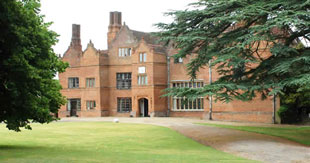 Spain's Hall - Essex Spain's Hall - Essex
1615 -
Elizabeth
Kempe marries Ralph Outlaw son Robert born 1626
1617 - Sched
excom: Thos OUTLAWE Bridge Kent; non-appearance - 6 May -
Canterbury Cathedral
1617 - Hornsey,
Richard, of Bishopsbourne, miller, and
Mary Outlawe of Bridge, St. Margaret's, Cant. Isaac
Outlawe of Bridge, husb., bonds. Canterbury Marriage licences - Nov.
9
1624 - Married
Thomas Wright, of Ripon, and Jane Outlawe, widow, of St.
Michacl-le-Belfrey, York
1637 - Ralph
Outlawe of Witchingham, matriculated Pembroke College, 1637; B. A.
1642; M. A. 1645 - Pembroke College, Cambridge 1639
- Admission
Lincoln's Inn - Thomas Outlawe, son and heir app. of Ralph Outlawe,
Witchingham Parva, Norfolk - Lincoln's Inn
1644 - Robert
Kempe Knighted by Oliver Cromwell at Spain's Hall 7th Aug 1644
(brother of Elizabeth Kempe)
1658 - John Outlawe of Lymehouse Shipwright and Elizabeth Baker of
Radcliffe, W. (marriage)
1661-1684 - Ralph
Outlaw, Rector/Vicar of Necton All Saints - Necton
All Saints History - Necton
All Saints Norfolk Churches - Bintry - Ralph Outlaw
1674 - Thomas
Outlaw - County Norfolk - Admitted Corpus Christi College
- Cambridge
In 1620 we
find the eldest branch of the family seated at Little Witchingham, in
Norfolk, but in 1670 that branch became extinct [in England], and a cousin,
Henry
Outlaw, Attorney-at-law, of Haddenham, in Cambridgeshire, then became the
representative. He married a lady of good fortune, Miss Hare of Beckenham,
in Kent, whose fortune was invested in the South Sea speculation ; after
her husbands death, when she was quite advanced in years, she was taking a
nap after dinner, according to her usual custom, when a neighbour, half
frantic, rushed in, and throwing up his arms in an excited manner,
exclaimed "Oh! Mrs Outlaw, we are all ruined! the South Sea
speculation is all a bubble! we have lost everything!" she was so
alarmed that she had a paralytic stroke, and died. Her only son
Thomas, married Sarah Underwood, co-heiress of Thomas Underwood Esq., and
their eldest son, Rev. Robert Outlaw, was Rector of Longford, in the county of
Salop". So this gives us the name of Thomas' parents.
Rev. Robert Outlaw's Son in EIC India:
1819 - Outlaw, Robert
- Cavalry . . 1798 - Lieutenant : Aug. 18,1801 - Captain: May 20,
1813 - Died Oct. 25, 1819, at Fort St. George Madras India
And his son :
1843 - The
Battle of Miani (Meanee) - Lieutenant
T. F. V. Outlaw, 26th Madras Native Infantry, commanding the company
of Madras Sappers and Miners - 17 February 1843
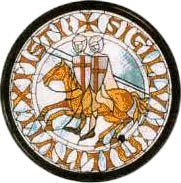 The Order of the Hospital of St. John of Jerusalem, and its Grand priory of England The Order of the Hospital of St. John of Jerusalem, and its Grand priory of England
In 1540 Henry VIII dissolves Hospitaller's , The greater number of the Knights retired to Malta, and of those who
remained several were executed, being charged with having denied the
King's supremacy. Of these, Sir Adrian Fortescue, Sir Thomas Dingley and
Sir Marmaduke Bowes, were beheaded on Tower Hill, and Sir David Gunston
was hanged, drawn and quartered at St. Thomas Waterings, in Southwark.
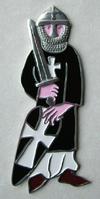 Shield of the Knights Hospitaller of St. John of Jerusalem, 12th
Century Shield of the Knights Hospitaller of St. John of Jerusalem, 12th
Century
As already mentioned, the Knights Hospitaller were actually formed
before the Templars (circa 1070); however they did not become a
military order until some time later. ... The
first military brethren employed by the Hospitallers may have just
attached themselves to the Hospitallers, rather than being full
members of the Order; because initially the Hospitallers saw their
primary duty as being the care of pilgrims, rather than fighting the
Saracens. However, it was soon realized that the care of pilgrims
included making sure that they reached their destinations safely, as
well as the protection of the Order's hospitals. By the 1130s the
Hospitallers were being given castles to re-build and garrison; and by
the 1160s the Order was accepting full-time military brethren.
These men carried black shields emblazoned with a white cross.
The Order of Saint Thomas
- The
Knights
of Saint Thomas was established in 1191, at Acre
- Membership was restricted to Englishmen.
...The
purpose of the Order was tending to the sick and wounded, and
burying the Christian
knights
who fell in battle in the Holy
Land...about the year 1279, as the purposes of the Order shifted from
that of religious hospitallers to a more military role...At the fall
of Acre, 12 May 1291, the Master and nine knights of the Order were
killed...London premises being reported as being in ruins by 1330.
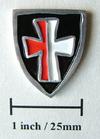 Shield of the Knights Hospitaller of St. Thomas of Canterbury in
Acre. Shield of the Knights Hospitaller of St. Thomas of Canterbury in
Acre.
The Knights of St. Thomas was an English order which was formed during
the Third Crusade. It was never a large order, and it
eventually disappeared in the mid-fourteenth century. However, it is known
that a contingent fought in the defense of Acre in 1291; and they
may even have taken part in the notable sortie on the night of the
15th April. The Crusaders sallied forth against the Saracen besiegers,
and initially took them by surprise. Unfortunately, they pressed their
advantage too far, and some of the Crusaders' horses tripped over the
Saracens' tent ropes in the darkness. This allowed the Saracens to
rally, and the Crusaders were repulsed with heavy losses.
The Gaspe Valpys
- NOTE: Old Jersey surnames beginning with a “U” appear to be
mostly British, such as Underwood, Upton, Urquhart, Usher, Udall,
Utley, Unwin, and Upson.
One very old J surname, L'Utlagh, the Outlaw, appeared in Grt. Britain
in the English form
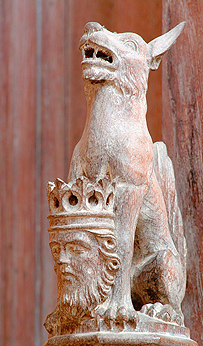 Wolf
as Protector of Kings Wolf
as Protector of Kings
Norse myths were told in the Poetic Eddas, but they were not written down until the 13th century
One who wishes to take another's life must get up early like the wolf.
Wulf
is on one island I on another.
That island, surrounded by fens, is secure.
1050 - Helgi
Hundingsbane - can safely be dated, on the basis of other
evidence, after the year 1000 - composed probably not
earlier than the second quarter of the eleventh century - The
Ylfings'
son -
His eyes flash sharp | as the heroes' are,
He is friend of the wolves; | full glad are we."
Cambridge Guild Records
- So many people were dying of the Plague that they had no one to leave
their money and property to, and the living inherited a great deal, so they formed
(and left their goods to) the
Cambridge Guilds, and with those funds, created some of the
greatest colleges in the world. The Outlaw's were no exception.
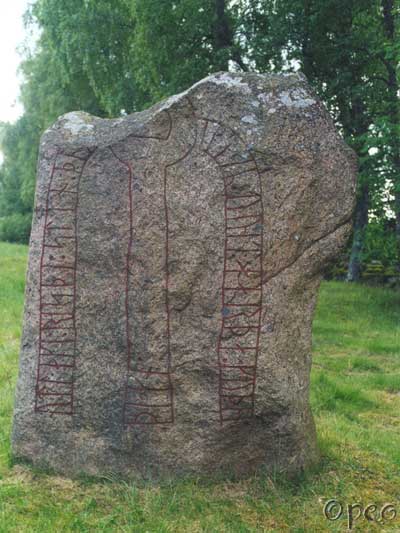
990~1010AD -
"Utlage
raised this stone in memory of Eyvindr, a very good thegn"
Ballstorp, Edsvära, Västergötland, Sweden
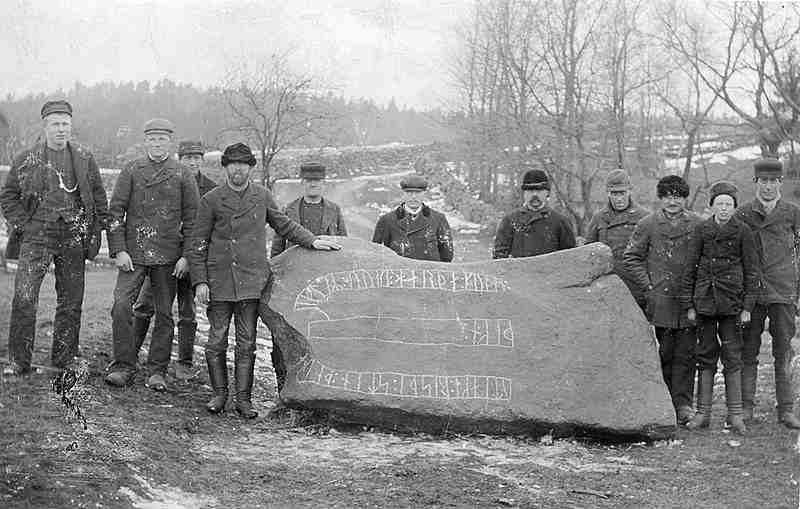
Mary Magdalene
- In Hebrew, "pillar" is a "M'GD'L" or
"magdal." So the name "Mary, the Magadalene"
means "Mary the Pillar (of her tribe)." She was
the chief heir of the tribe of Benjamin.
The Twelfth
Tribe of Israel - the Tribe of Benjamin had been
singled out for a very special and exalted blessing, when in
Deuteronomy 33:12, Moses pronounced blessings on the patriarchs of
each of the twelve tribes. Of
Benjamin, Moses said, "The beloved of the Lord shall dwell in
safety by him; and the Lord shall cover him all the day long, and
he shall dwell between his shoulders."
This symbolism later became a red cross between the
shoulders. This
symbolism has carried down to modern times.
This 'red cross' has even been claimed as the origin of the Knights
Templar
The English of the upper and middle classes hastened to bestow upon their children the Christian names of their
conquerors
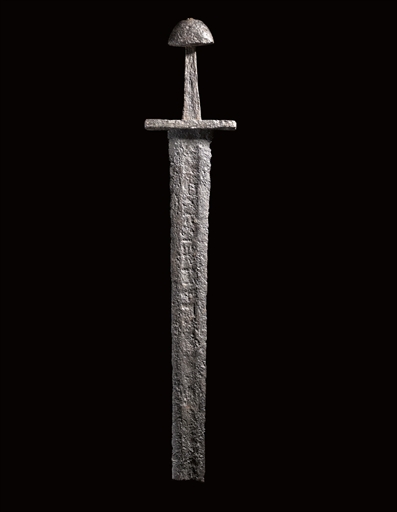
UlfBerht -
Bright Wolf - Circa 950
The history and antiquities of the round church at
Little Maplestead Formerly belonging to The KNIGHTS HOSPITALLERS
(Essex) - The
charter of Ida daughter
of the late Richard Utlaw
- five acres of land and
half an acre of meadow, with appurtenances.
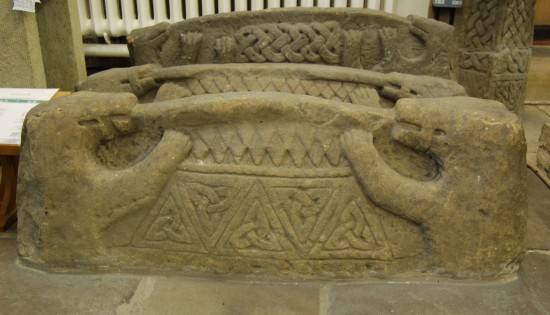
Hogback research circa
950AD
1349 - Registrum
de Kilmainham:
Chapter Acts in Latin of the Knights Hospitallers of St. John of
Jerusalem at their chief house of Kilmainham, near Dublin, under the
Grand Prior Roger Outlawe, 1321-39 - Bodleian
Library - Balliol
College, Oxford
Cross-legged Knights indicate that the person so represented died in the Christian faith. As crusaders were supposed so to do, they were generally represented on their tombs with crossed legs.
“Sometimes the figure on the tomb of a knight has his legs crossed at the ankles, this meant that the knight went one crusade. If the legs are crossed at the knees, he went twice; if at the thighs he went three
times.”—Ditchfield: Our Villeges, 1889.
|
Outlaw Genealogy Page
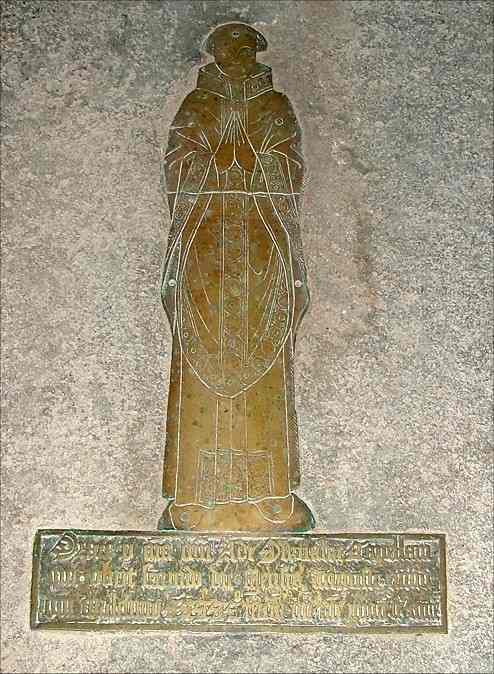 I am an Outlaw. Our family story
is that we relate to pre-conquest Anglo-Saxons as shown on the left panel. I am an Outlaw. Our family story
is that we relate to pre-conquest Anglo-Saxons as shown on the left panel.
We are possibly Wuffings from
Angeln Denmark/Sweden and descended from the men of King Edgar
and St. Dunstan. It appears that a few Utlagh's
retained some of their lands after the conquest around Norfolk at the Isle
of Ely. Very much an Ivanhoe story. We are possibly related to
the Hospitaller Knight of St. John, Sir Roger
Outlawe in Ireland.
Now it seems that a first name used by native pre-conquest
Danish/Saxon people in England was "Utlag" (the g is not
pronounced) and a likely
scenario is that after the conquest when surnames were the Norman fashion,
children were given Christian/Norman names like
"Walter", they began to refer to themselves as "Walter
'son of (fil fitz de le)' Utlag" and then "Walter de/le Utlag"
etc... see: The English of the upper and middle classes hastened to bestow upon their children the Christian names of their
conquerors
The earliest documented use of the name Utlag is found on
Rune Stones in "Geatland" Sweden where the Wuffings originated.
"Outlaws" were also Norwegian Danes that were pushed out of
there homeland and left for Sweden and other lands like the Orkney
Islands, Dublin Ireland, Bristol Wales, Kent England or Iceland. See
Viking Outlaw Origins
Our family is one of the original American Southern
Families, coming from Norfolk England to Norfolk Virginia in 1665.
All Outlaw's for the most part descend from Edward Outlaw, the younger
brother of Captain John Outlaw who ended up remarried in Quebec
The Outlaw Family have served and fought in the French Indian Wars,
The Revolution, War of 1812, War between the
States, WWI, WWII, Korean Conflict, Vietnam...
Outlaw men are generally Auburn-Red-Copper haired , Dark Blue/Grey eyed, and six feet or taller...
Examples:
1777 Alexander
Outlaw was a man of large frame, six feet, blue eyes, sandy hair and red
mustache.
1837 Congressman
David Outlaw - Awkwardly tall, he stood a bony six-three, with red hair, fair skin, and thick
glasses.
Outlawe name Progression - variations:
Vtlag/Utlag -> Vtlage/Utlage -> Vtlaghe/Utlaghe
-> Outlagh -> Utlawe -> Owtelawe -> Owtlawe-> Outlawe
Do you have any new early (Prior to 1670) Outlawe
information?
Send your questions and comments to Outlawe@mygen.com
1618 - Robert
Hussye & Francis Outlawe - 11 Oct 1618 - Marriages at Hedenham
Norfolk - Hedenham
1624 - Robert
Hussye dies in Virginia plantation Flowerdew in 1624 but no mention of
a wife (Francis Outlawe)
1640-47 - During
the English
Civil War (1643-1647) and in the
following Commonwealth period, records were poorly kept and many are now missing
after being destroyed or hidden by the clergy.
Captain
John Outlaw - Sailor and Shipwright - Born: Limehouse,
England -Died: 1696 or 1697, possibly in Acadia
1649 - The
great Cavalier exodus," he says, "began with the king's execution in
1649, and probably slackened after 1660.
1658
- Nov 16 - John Outlawe of Lymehouse Shipwright and Elizeabeth Baker
of Radcliffe, W.
1659 - Matthew Kemp in
Virginia - son of Edmond Kemp who was nephew of Sir Robert
Kemp (and Cousin to Edward and John Outlaw)
1661 - Captain
Thomas Outlaw - The Blessing of London - arrives in Boston
1665
- Capt. John Outlaw - sails
"The Olive Branch" ship of six guns with 96 men of crew back
to Virginia from Florida. Part of Edward Morgan's fleet preparing to
attack the Dutch West Indies
1678
- Edward
Outlaw 1st / Elizabeth Davenall - Western Branch Elizabeth River - Portsmouth Virginia
1692 -Captain
John Outlaw (Jean Outelas) married Françoise Denis -
Boucherville, Quebec
1721 - Edward Outlaw 2nd / Anne Ivey - Outlaw's
Landing - Edenton Chowan-Bertie
1745 - Edward Outlaw
3rd /
Patience Whitfield -
Outlaws Bridge (Road) - Outlaws Place - Albertson, Duplin County
1936
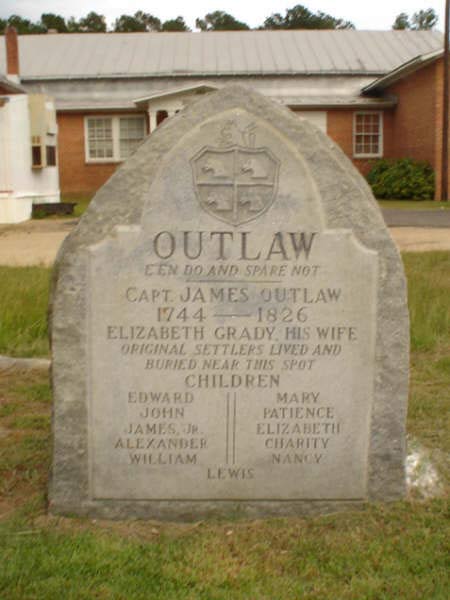
- Capt.
James Outlaw Monument - Outlaw's Bridge - Duplin North Carolina - May 5
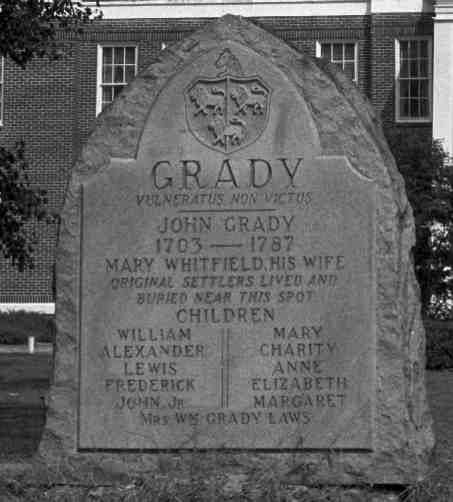
Gregor
Motto: 'S rioghal mo dhream, My race is royal. E'en Do bait Spair
Nocht, In what you do, spare nothing.
1850 -
Edward
Outlaw's Liberty Hall - Indian
Woods Road, Windsor - Bertie - History
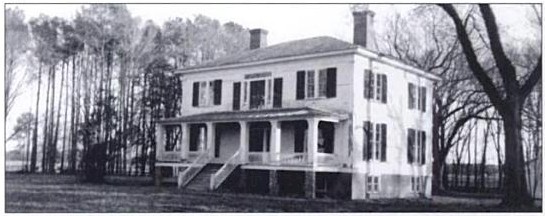
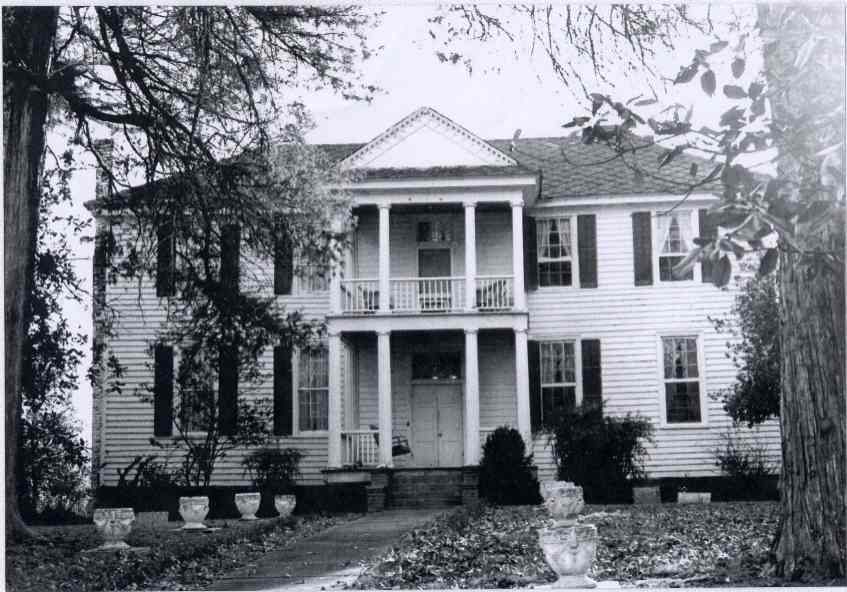
The
"Outlaw House" or "Liberty Hall"
in Windsor, Bertie Co., NC, off now SR 1108 at the corner of Indian
Woods Rd. and Grabtown Rd. - National
Register BR0068
This Georgian period dwelling was built in 1790 and is one of the
oldest houses in Windsor. Previous owners include: John Johnson,
attorney, (first owner); Elisha Rhodes, appointed by President Van
Buren as US Consul to the Port of Galveston, Republic of Texas.
William Henry Rhodes (his son)- one of the first science fiction
writers
David Outlaw - a pro-Unionist Congressman before the Civil War.
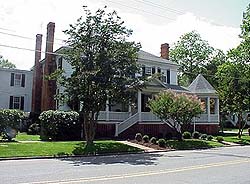
It has been restored and is now the King Street Bed and
Breakfast and is run by Susan and Ray Beale. 401 South King Street,
Windsor, NC 27983
Outlaw
Chapel
OUTLAW'S CHAPEL -
[send me a photo!]
The chapel mentioned above located on Wm Dukenfield's land,
[Merry Hill] was nearly a day's journey to Cashy, the location of
the new County Courthouse. In 1760, the families who lived there:
Lockhart's, Outlaw's, Hill's, Gray's, Whitmel's and Clifton's wanted a
church of their own.
In studying the Court Minutes, Harry Thompson was able to
determine that a chapel (first known as simply Cashy Chapel)
did exist as it is mentioned in various ways.
A deed dated Nov 12, 1777 from Ralph Outlaw and David Outlaw
to Alexander How and Humphree Hardee, Church Wardens for Society
Parish, an acre of land on the Outlaw plantation is the indication
of this Chapel.
The Chapel can also be seen on the Collet
and Mouzon maps. The exact location is not known, nor are there any
known records from this Chapel. We can assume that it was active
while the town of Cashy was thriving (1744-1769). The Revolution
brought about a disregard for the Church of England, and no doubt
affected this Chapel as well...and it may have been used by Baptists
and Methodists. The first record of Episcopal services in Windsor is
about 1830, so those years in between are missing in our history.
Resource:Episcopal Church in Bertie Co. (1701-1990) from its
Anglican roots to the twentieth Century. Published by St.
Thomas' Episcopal Church. (1991) $35 (Available in Hope Plantation
Bookstore) 256 pgs. Photos.
The lost Town of Cashy
Merry
Hill - Near this is the old Fannie Pugh place, now owned by Mike
Smithwick and Sutton Phelps . Tis said that much of Blackbeard's
treasures have been and are buried on the creek and river farms
nearby.
Dossey
A. Outlaw Plantation - Mississippi National Register of
Historic Places
-
MISSISSIPPI,
OKTIBBEHA COUNTY, Outlaw, Dossey A., Plantation, 2173 Oktoc Rd.,
Starkville, 02000354, LISTED, 4/11/02
Dossey
A. Outlaw came to Oktibbeha County from North Carolina at the
age of nineteen. He was a member of the first board of Police of the
county when he was but twenty-one.
Outlaw and Beverly had the first brick store in Starkville. Outlaw
bought large tracts of land from the Indians.
He returned to North Carolina and married Clara Eliza Harris, Jan.
29, 1835. He remained in North Carolina a few months. When he
returned to Mississippi his wife's mother came with them; also his
half brother Napoleon Askew; also his stepfather, David O.
Askew,
his step-father wife, and their children then born unto them.
Also among this crowd coming to Mississippi from Bertie County,
North Carolina was Coom Morgan who was dissatisfied at home. He
remained in Outlaw's employ until after the War between the States.
Hence we see the origin of Morgantown of this county, for it is made
of descendants of Mr. Morgan, who was so esteemed by the
Outlaws." info from Mr. P G Suddeth. in "1937 History
of Oktibbeha County, Mississippi"
Jeremiah Outlaw
- William Dossey Outlaw - Origins
William Dossey Birth: 1778 - North Carolina, USA
Death: 1853 - Marengo, Alabama, USA
Mary E Outlaw Birth: 1792
William Dossey - Compiler of " Choice" a hymn book
extensively used in southern states He was very
popular in Bertie County North Carolina where he was a minister and
married Mary Outlaw.
Many children were named after him....
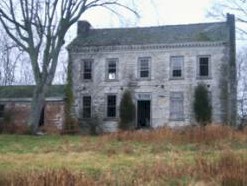 Ten in Tennessee - Rural Mount, Hamblen County
- The house was reputedly built in 1799 by Alexander Outlaw for his son-in-law Joseph Hamilton. Both of these men were instrumental in founding the State of Franklin and later the State of Tennessee Ten in Tennessee - Rural Mount, Hamblen County
- The house was reputedly built in 1799 by Alexander Outlaw for his son-in-law Joseph Hamilton. Both of these men were instrumental in founding the State of Franklin and later the State of Tennessee
The
lost State of Franklin - Alexander Outlaw
Joseph Anderson
- In 1792, Anderson married Patience Outlaw, the daughter of
Tennessee pioneer Alexander Outlaw. His wife's dowry included
land along the Nolichucky
River in what is now Hamblen
County (but then part of Jefferson),
where the Andersons built their home, Soldier's Rest. In 1796,
Anderson and his father-in-law Alexander Outlaw represented
Jefferson County at Tennessee's constitutional convention in
Knoxville. ... Anderson's son, Alexander
Outlaw Anderson, served as a U.S. Senator from Tennessee
from 1840 to 1841, and helped organize the government of the
State of California in the early 1850s. Alexander
Outlaw later moved to and died in Cahaba Alabama in 1826 - Judge David Campbell
- 1779, he married Elizabeth Outlaw, the daughter of Colonel
Alexander and Penelope Smith Outlaw. By 1783 David and
Elizabeth had left Virginia, moving across the state line to (now
Greene County, Tennessee) Washington District, NC. On March 11, 1811, he was appointed Judge of Mississippi Territory by President Madison, but his health had been impaired and his death occurred before he served in that capacity. He had sold his Loudon County home to General William Lenoir and
moved his family to Rhea County in early 1812. He died and was buried there in November 1812. His widow, Mrs. Elizabeth Outlaw Campbell, continued to live on the Rhea county plantation until 1819, when she sold the place to John Lock, a prominent citizen of the county, and moved with her unmarried children to
Cahaba,
Alabama, where her father, Colonel Alexander
Outlaw, had located.
Judge David Campbell and his wife Elizabeth Outlaw Campbell had eleven children.
Foundation working to preserve site of
Alabama's first capital, Old Cahawba MONTGOMERY, Alabama
-- Alabama's first capital, Old
Cahawba, is now an abandoned town draped in Spanish moss, history and
ghost stories. But the site, sometimes called an antebellum Pompeii, could
also be a tourist attraction highlighting the state's historical past and
ecological richness, according to members of a nonprofit foundation.
The New Berne
Colony - The Palatines - Blackbeard and the Kornegay's - Elizabeth
Outlaw married William Kornegay, one of the sons of George
Kornegay see: Outlaws Bridge
Road - Kornegay's
Bertie County
- PETITIONS Against KING GEORGE
- I will bear faithfully and true allegiances to the State of North
Carolina and will to the utmost of my power support, maintain and defend
the Independent Government thereof against George the III King of Great
Britain and his successors -
Edward Outlaw , John Outlaw , Aaron Outlaw, Josiah Outlaw, Lewis Outlaw, Thomas T.
Outlaw
Roster of
Soldiers from North Carolina in the American Revolution
By North Carolina D A R, National Society Daughters of the American Revolution of North Carolina,
Gertrude May, Sloan Hay
- Edward Outlaw
- James Outlaw
- John Outlaw
- Lewis Outlaw
- Aaron Outlaw
Revolutionary
Soldiers Duplin & Sampson Co. NC
From the Book, "Revolutionary War Records of Duplin-Sampson Counties."
By Virginia and Oscar Bizzell c1997.
- OUTLAW, Alexander # 1, Captain, Duplin County Militia, Member of the Safety Cmmittee for
- OUTLAW, Alexander # 2, Captain, NC Militia
- OUTLAW, Edward, Private/Ensign, NC Militia
- OUTLAW, George, Private, NC Militia
- OUTLAW, James, Sergeant to Lieutenant, NC Militia, Member of Safety Committee, 2nd Continental Line
- OUTLAW, Palhah, Private, NC Militia
Duplin County, NC
- Revolutionary War Military Services, Surnames J-R
KORNEGAY, William, Private, NC Militia - wife: 1773 Elizabeth
Outlaw - Died Kornegay’s
Bridge -
6- Zilpha Kornagay - 1774 who married Edward Outlaw
OUTLAW, Benjamin, Private, SC Militia
OUTLAW, Bentley, Private, SC Militia - said
his military service was "principally chasing down Tories"
OUTLAW, James, Sergeant to Lieutenant, NC Militia
OUTLAW, John, Private, GA Militia
OUTLAW, Lewis, Private, NC Militia
OUTLAW, Lodwick, Private, GA Militia
Alexander Outlaw (1738-1826) was at
the battle of Kings Mountain, under the command of Col. William
Campbell. He was born in Duplin County, N. C.; died in Catauba, Ala.
History of the Lost State of Franklin - Alexander Outlaw
1846 -
The First Regiment of North Carolina Foot Volunteers in the War
With Mexico during the year 1846, 1847 and 1848 - Company B -
Sergeant LEWIS OUTLAW
Lewis Henry “Mexico” Outlaw -
1835-1899 Lewis was the son of Lewis Henry Outlaw Sr. and Elizabeth
Whitfield. In 1846, Lewis was 2nd Sgt, Co. B, 1st. North Carolina
Volunteers - First man from Duplin County to join the army for the Mexican
War, hence the nickname, "Mexico." After returning from the Mexican War,
Lewis married Charlotte Smith, 3 January 1850. Their five
sons were Joseph Benjamin, John William Sr., James Leanders, A'Dialdon,
and Matthew Lafayette Sr. They also had twins, Lewis Wright and Fannie
Elizabeth, who died young. Following Charlotte's untimely death
during the hard times of the Civil War, Lewis married his
cousin, Catherine "Katie" Herring, 10 July 1866.
Lewis, Herring, and Kornegay Family Bible Records
CONFEDERATE IRREGULAR WARFARE 1861 - 1865
Confederate Heroes
Records of Ante-Bellum Southern Plantations
Search Outlaw in the Confederate Pension Application Files -
Texas State Archives
The War Between The States - South Carolina
SIXTH GENERATION NINTH GENERATION
TWELFTH GENERATION
English Names of
the 1500s
Edward Outlaw ca 1727
Vicksburg
- Pvt Sandy Outlaw - Pvt Abud Outlaw
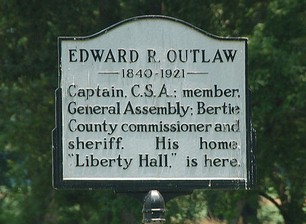 ELEVENTH REGIMENT. By COLONEL W. J. MARTIN and CAPTAIN E. R. OUTLAW, Co, C.
- First Lieutenant Thomas W. Cooper was killed at Gettysburg, July 1, 1863,
and Second Lieutenant Edward R. Outlaw was promoted to Captain.
ELEVENTH REGIMENT. By COLONEL W. J. MARTIN and CAPTAIN E. R. OUTLAW, Co, C.
- First Lieutenant Thomas W. Cooper was killed at Gettysburg, July 1, 1863,
and Second Lieutenant Edward R. Outlaw was promoted to Captain.
On the night of 7th April, in a consultation of the officers of the Eleventh Regiment, Captain Outlaw, of Company C, was
advised to take charge of the flag and see that it was not lost.
It was removed from the staff, the silk cover replaced, and during the 8th of April it was not unfurled and no one knew but
that the flag was on the staff. When General Lee rode to the front and through the lines to meet General Grant, every one
knew that the hour of surrender had come. The officers present with the regiment at once retired to a secluded thicket, and raking
up a pile of twigs and leaves, committed the flag to the flames. Before burning it. Captains Outlaw and J. M. Young tore out pieces of each color. Sincere tears have often been shed around
funeral pyres, but never more bitter and sorrowful tears bedewed any ashes than were shed over their dead flag. It had been given
by the Legislature of North Carolina to the Bethel Regiment, and then committed to the keeping of the Eleventh. It had
waved over it in triumph on many a bloody field. It had never been dishonored and they could not bear to see it the trophy of
an enemy.
Bertie County, NC History of Confederate Regiments
EXPERIENCES OF BERTIE COUNTY'S CONFEDERATE SOLDIERS
Compiled by Gerald W. ThomasS
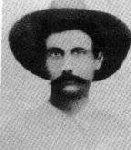 Baz (Bass)
Outlaw - Texas Ranger - (From Georgia) "Little Wolf" Baz (Bass)
Outlaw - Texas Ranger - (From Georgia) "Little Wolf"
North
Carolina WWI deaths
Outlaw, Kendrick W. Winnabow., DOD - DOD = Died of Disease
Outlaw. William, Weldon., DOD
John F.
Outlaw Field - Clarksville-Montgomery County Regional Airport
...Among them were Collier and Captain John Outlaw, the commanding
officer of the l05th Observation Squadron detachment at Clarksville. By
the late summer of 1929, these men, along with other progressive
citizens including Mayor W.D. Hudson, Howard Smith, Emmitt
Ladd, and Joseph Boillan. Jr., formed the Clarksville Aviation
Corporation. .... Military pilot training was the principle
activity at the Clarksville Airport during the early
1940′s...During a memorial service on October 18, 1943,
C1arksvi11e Airport was named Outlaw Field.
World
War II Casualties from Wyandotte County, Kansas - Outlaw, William L 17056425 1 SG KIA
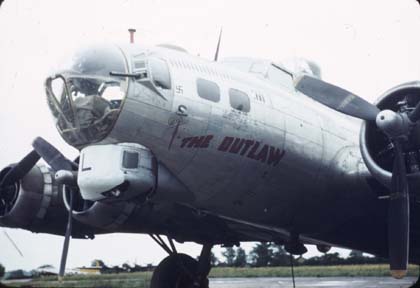 The Outlaw - B17 - 838th Squadron WWII
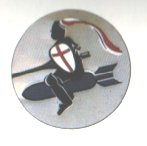 Wendling
- In the heart of Norfolk Wendling
- In the heart of Norfolk
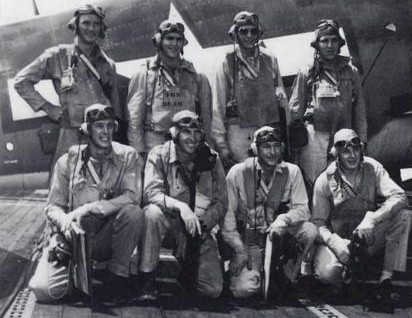 Edward Cobb Outlaw - WWII Naval Ace and "Outlaw's
Bandits" Edward Cobb Outlaw - WWII Naval Ace and "Outlaw's
Bandits"
Rear Admiral Edward
Cobb Outlaw -
Carriers
in combat the air war at sea - Vietnam - Rolling Thunder - Cambodian supply depots off limits - SOVIET
SA-2 SAM sites shot down 115 American planes . "We were restrained to carrying out a campaign which seemed designed NOT
to win" because RUSSIAN technicians might be killed. McNamara did not allow pilots to attack any installation where MIG's were
based.
1940 - Argyllshire,
ship loss - OUTLAW, Samuel J, Engineman, RNSR, LT/KX 100326,
killed - Operation
Dynamo - Dunkirk - June
1 1940 The naval
trawler was torpedoed
and sunk in the North
Sea off Dunkerque by German motor
torpedo boat S-35
WWII
First Armored Amphibian Battalion - Outlaw, Joseph L.
1951 - GEORGE
M OUTLAW SFC - Bertie County , NC - KIA - Korea - APRIL 18, 1951
1969 - SP4
Charles Reuben Outlaw, Jr, West Palm Beach, FL - KIA -
Vietnam
Alain Outlaw - Archaeologist
Alain Outlaw peering into Colonel Joseph
Bridger's tomb:
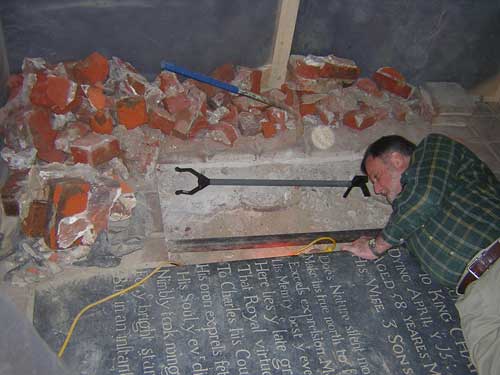 The
Exhumation of Colonel Joseph Bridger The
Exhumation of Colonel Joseph Bridger
An early seventeenth-century village known as Argall Towne has been discovered near Jamestown, Virginia. People lived at the village, on land owned by Samuel Argall, for two years. Archaeologist Alain Outlaw has been looking for it for the past 32 years.
Governor's Land: Archaeology Of Early Seventeenth-century Virginia Settlements
(Hardcover
- 1990-04-30) by Alain
C. Outlaw
Alain Outlaw of
Archaeological & Cultural Solutions, has been looking for
Argall Towne since 1975.
The elusive, short-lived settlement was
started in 1617 near Jamestown, Virginia, by Capt. Samuel
Argall, best known for kidnapping Pocahontas in 1613. The
village was short-lived, with most of its residents moving soon
after to Martin’s Hundred near Carter’s Grove Plantation.
- OUTLAW: See also Joseph
Anderson; Alexander
Outlaw Anderson; Paul
Davis Grady
- Outlaw, Arthur R. — of Mobile, Mobile
County, Ala. Mayor
of Mobile, Ala., 1967. Still living as of 1967.
- Outlaw, Cabell — of Mobile, Mobile
County, Ala. Republican. Delegate to Republican National
Convention from Alabama, 1964.
Still living as of 1964.
- Outlaw, David (1806-1868) — of
North Carolina. Born in North Carolina, 1806.
Cousin of George Outlaw. U.S.
Representative from North Carolina 9th District, 1847-53;
member of North Carolina state legislature. Died in 1868.
Interment at Episcopal
Cemetery, Windsor, N.C.
- Outlaw, G. C. — of Mobile, Mobile
County, Ala. Democrat. Alternate delegate to Democratic
National Convention from Alabama, 1944.
Still living as of 1944.
- Outlaw, George (d. 1825) — of
North Carolina. Born near Windsor, Bertie
County, N.C. Cousin of David Outlaw.
Member of North
Carolina house of commons, 1796-97; member of North
Carolina state senate, 1802, 1806-08, 1810-14, 1817, 1821-22; U.S.
Representative from North Carolina 2nd District, 1825. Died in
Windsor, Bertie
County, N.C., August
15, 1825. Interment at a
private or family graveyard, Bertie County, N.C.
- Outlaw, Harry — of Hearne, Robertson
County, Tex. Republican. Alternate delegate to Republican
National Convention from Texas, 1988.
Still living as of 1988.
- Outlaw, Lisa P. — of Alabama.
Reform candidate for Presidential Elector for Alabama, 2000.
Female.
Still living as of 2000.
- Outlaw, N. C. — Democrat.
Candidate for Presidential Elector for Texas, 1956.
Still living as of 1956.
Jones-Outlaw Cemetery
- Duplin County, N.C. - Location: on Hwy # 903 1 mile from Outlaw's
Bridge Road
Tennessee Places,
Outlaw Cemetery in Haywood County, TN
The Outlaw's - Wolves and their Wolfhounds
Wolves
in the ancient lore were commonly associated with outlaws in general
and seen to have many traits in common. ...The outlaw in
Saxon society held a unique position. Outlaws because they were
largely expendable were used to commit deeds that no one else were
willing to do. Often the outlaw though feared and hated found
themselves in the role of hero.
Úlfhéðnar are sometimes described
as Odin's
special warriors, with the pelt from a wolf and a spear
as distinguishing features...protectors of royal power.
As late as 930ce King Harald I Haarfager (=Fairhair) employed
Ulfhednar as his bodyguards.
Ralph - It is of Old
English origin, and the meaning of Ralph is "wolf
counsel".
The wolf is
an animal
with a reputation
for being crafty.
Rolf
is a German
form.
WOLF NAMES
- the
names of Odin's two wolves. Freki means"Ravenous", Geri
means "Greedy".)
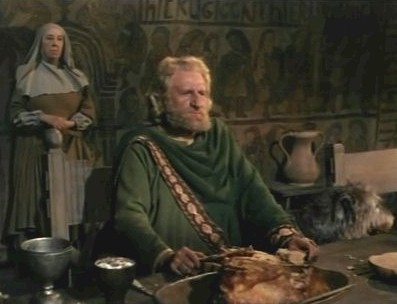 The
Disappearance of Wolves in the British Isles The
Disappearance of Wolves in the British Isles
One of the nicknames used for Ireland at this time was
“wolf-land”.
The presence of wolf throughout the Midlandian ice age which probably reached its peak around 18,000-20,000BP.
The last wolf is said to have been killed in 1786
Wolves in
Ireland
- The ringforts, a common feature of the Irish landscape, were built partly as a
defense against wolves and to protect livestock, over the period 1000 BC to AD 1000.
Scottish Deerhound Club of America
- The most perfect creature of Heaven.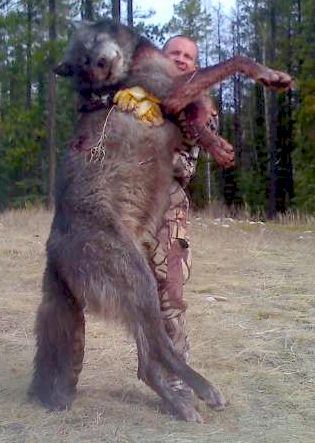 
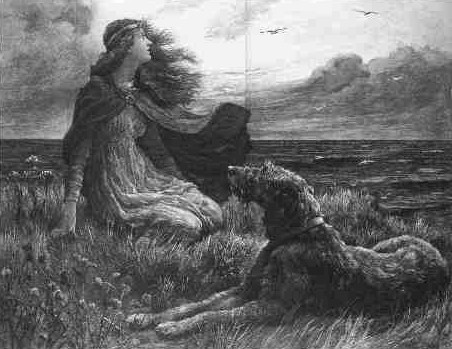 Irish Wolfhound History
♦Wolves were very numerous in England, King Edgar
unsuccessfully attempted to effect their total destruction by
commuting the punishment of certain crimes into the acceptance of a
certain number of wolves' tongues from each criminal ; their heads
were demanded by him as a tribute particularly 300 annually from
Wales, a.d. 961 - which was
paid for three years, but was then discontinued because no more wolves
were left to be killed, a highly improbable story
In Britain,
the month of January was set aside for hunting Wolves. January was
called Wolfmonat, or Wolf Month...
Lyrics and
legends ...
Ogam - Ogham in
America - Ancient Irish script found in Virginia and Carolina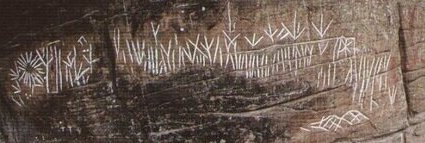
At the time of sunrise, a ray grazes the notch on the left side on
Christmas Day, the first season of the year, the season of the blessed
advent of the savior Lord Christ. Behold he is born of Mary, a woman.
America’s First Christmas Card
- Saint Benedict Center
Saint Brendan’s account of his travels across the Atlantic,
certainly predates the Viking voyages by some 400 years and
establishes Irish visitors as early as the Sixth Century A.D., but no
evidence had ever been found to support that claim.
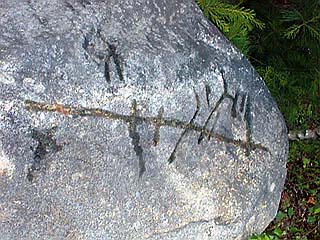 Sacred Landscapes Prehistoric or Not Part 3 Sacred Landscapes Prehistoric or Not Part 3
Ogham and the Irish in Britain
An interesting mix arose; by 400AD Irish and
British were fully differing languages, and additionally Christians
from both nations used different scripts (Latin and Ogham) for their
memorials. Irish never replaced British in Wales the way it did in
Scotland, but relative numerical strengths do not necessarily explain
why; less obvious factors could be involved." - Physical evidence
of the Irish presence in post-Roman Britain comes in the form of Ogham
inscriptions
In Britain, they have been found along the western seaboard -
south-west Scotland, Wales, Cornwall and Devon and also in the Isle of
Man
HISTORY OF THE CONQUEST OF ENGLAND By the
Normans ; Its Causes, and its Consequences, in England, Scotland, Ireland, & on the
Continent - Author Augustin Thierry - Translated William Hazlitt 1856
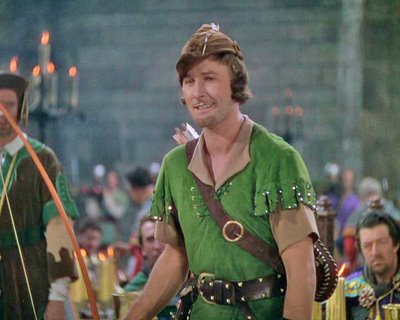 Robin Hood
- The idea of Robin Hood as a high-minded Saxon
fighting Norman
lords also originates in the 19th century. The most notable
contributions to this idea of Robin are Jacques
Nicolas Augustin Thierry's Histoire
de la Conquête
de l'Angleterre par les Normands (1825) and Robin Hood
- The idea of Robin Hood as a high-minded Saxon
fighting Norman
lords also originates in the 19th century. The most notable
contributions to this idea of Robin are Jacques
Nicolas Augustin Thierry's Histoire
de la Conquête
de l'Angleterre par les Normands (1825) and
Sir Walter
Scott's Ivanhoe
(1819). In this last work in particular, the modern Robin Hood -
"King of Outlaws and prince of good fellows!" as Richard the
Lionheart calls him - makes his debut.  The Original One Percenters' - My
Research
Journal
The Original One Percenters' - My
Research
Journal
The earliest use in literature of
"Outlaw" as a proper last name, 1150-1199 AD:
Renaus de Montauban - Ullage The
englois - "Outlaw the Englishman"
Britain
in Medieval French Literature - the creation
of a character named ' Ullage l'Englois ', Here the poet
seems to have heard the English word 'utlage' (outlaw), ... and
to have taken it to be a typically English proper name. [ BUT
WE know that Utlage's actually existed in that time period [
1150-1200 A.D.] So this was not a "MISTAKE"!
]
The Wolf Almanac: A Celebration of Wolves and Their World By Robert H. Busch
1264 - St.
Michael's Parish - Bernewelle - Grant to Robert son of Hubert Walter of all rents in
Cambridge and outside for a yearly payment of a pair of white
gloves Why? see: Medieval Gloves
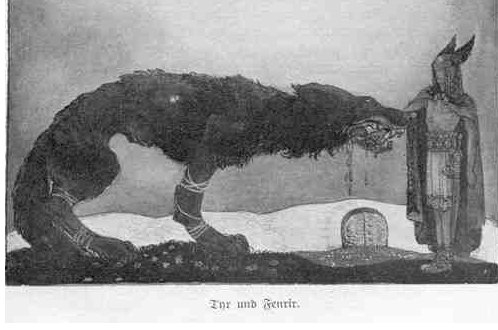 You fed the wolf--when others would not, You fed the wolf--when others would not,
you took his troth---when tied was he,
your hand took the wolf---when you bound the outlaw,
so one handed god---they call you.
To be left-handed or two-handed in The Scriptures
- Ehud Ben Gera, who was left-handed, won the
battle with the Moabites - Ehud of the tribe of
Benjamin, which was well-known for his left-handed warriors
When Israel
(Jacob) blessed his son Benjamin he compared him to a wolf that would go on tearing at his prey (Genesis
49:27 )
THE PHOENICIAN Origin of Britons Scots & Anglo-Saxons
Discovered By Phoenician & Sumerian Inscriptions in Britain, By
Pre-Roman Briton Coins & A Mass Of New History By L. A. Waddell [Lawrence Austine Waddell]
Fenrir and Tiw
Hittite
laws referred to the fugitive outlaws as "wolves".
Dacians called themselves "wolves" or "ones the
same with wolves"
1563 - Outlaw,
of Wichingham - a saltier between 4 wolves' heads - erased
gules - Coat Armour used in Norfolk Before 1563
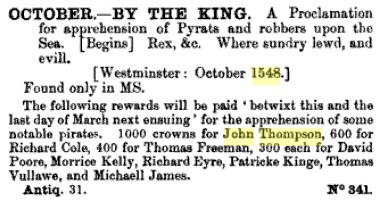 1548 - Thomas
Outlawe - King
Edward VI. issued a proclamation, A. D. Oct.
1548 - accused of piracy - 300
crown reward - In 1549 -
Lord Admiral Thomas Seymour, was beheaded for reasons of state, and
amongst the articles of accusation were several charging him with dealings
with pirates
- The first Thomas Outlawe in Wichingham was from Somerset where the
piracy was occurring for Thomas Seymour and Edward Seymour was Lord
Somerset
1548 - Thomas
Outlawe - King
Edward VI. issued a proclamation, A. D. Oct.
1548 - accused of piracy - 300
crown reward - In 1549 -
Lord Admiral Thomas Seymour, was beheaded for reasons of state, and
amongst the articles of accusation were several charging him with dealings
with pirates
- The first Thomas Outlawe in Wichingham was from Somerset where the
piracy was occurring for Thomas Seymour and Edward Seymour was Lord
Somerset
1563 - Thomas
Owtlaw of Somerset County - The
Visitations of Norfolk, 1563 and 1613 (moves back and settles in
Wichingham Norfolk)
Clerkenwell
- The
brothers [of the Order of St. John in Jerusalem Hospitallers] first
assumed their peculiar habit, namely, a black robe, having upon the
left side a white cross with eight points, in form of
that still called the Jerusalem
Cross
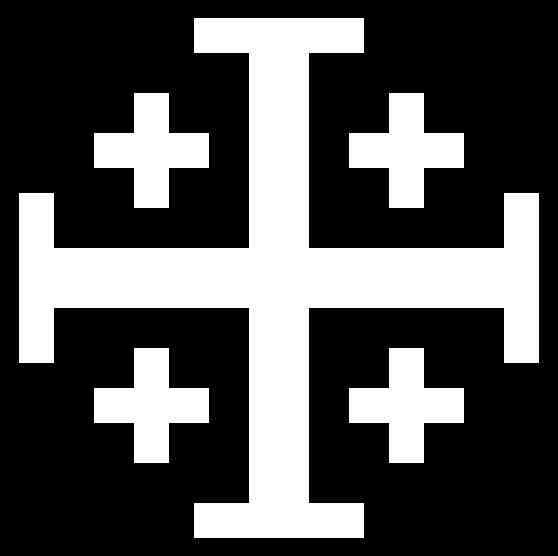 The History and Meaning of the Jerusalem
Cross, or the Crusader's Cross - This Jerusalem cross represents
Christ's command to spread the Gospel around the world, a mission that
started in Jerusalem. The History and Meaning of the Jerusalem
Cross, or the Crusader's Cross - This Jerusalem cross represents
Christ's command to spread the Gospel around the world, a mission that
started in Jerusalem.
The four evangelists, Matthew, Mark, Luke and John, with Christ in the center Christianity (central cross) broadcast by missionaries to the four corners of the world
Five crosses representing the five wounds of Jesus on the cross (small crosses for the hands and feet, and the large central cross for the spear wound in His side
Jerusalem cross
- The design originates with the coat of arms worn by Godfrey
of Bouillon during the First
Crusade, and it remained in use as the armorial of the Kingdom
of Jerusalem throughout its duration (1099–1291)
Whoever
wished to be received into the brotherhood, was required to prove his
nobility for four descents, and that by his mother's as well as his
father's side; to be of legitimate birth,
(an exception being made only in favour of the
natural sons of kings and princes);
to be not less than twenty years old;
and, in moral character, blameless
1563 - Outlaw,
of Wichingham - a saltier between 4 wolves' heads - erased gules -
Coat Armour used in Norfolk Before 1563 - [ Canting
arms - are heraldic
bearings that represent the bearer's name in a visual
pun or rebus
] - Outlaw ... ... Wolves' heads. [ Pun - An Outlaw is like
a Wolf's Head ]
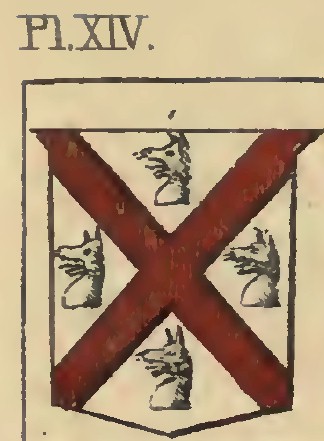 An
introduction to heraldry An
introduction to heraldry
“X” is actually indicating the Greek letter “Chi”,
which is short for the Greek ,
meaning “Christ”. So “Xmas” and “Christmas” are
equivalent in every way except their lettering. ,
meaning “Christ”. So “Xmas” and “Christmas” are
equivalent in every way except their lettering.
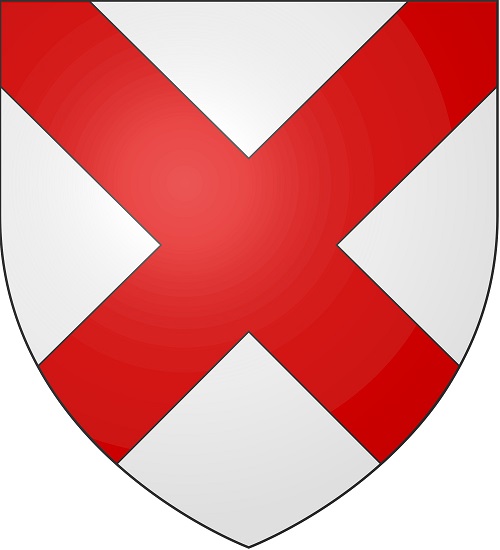
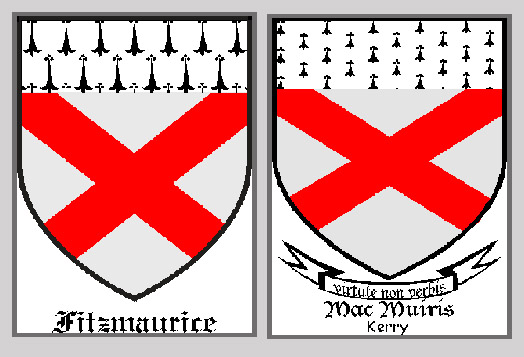
Similarities to the
Fitzgerald Arms crusader families... minus wolves heads
The Dering Roll is the oldest existing parchment roll recording
coats-of-arms from around 1270. It is believed to have been
commissioned by Stephen of Penchester who was the Constable of Dover
Castle at the time. The parchment roll is 2640 mm long by 210mm wide and
shows 324 coats-of-arms from Kent and Sussex with the names of the
knights above them.
170 Moriz FizGeroud (Maurice FitzGerald)
Argent a saltire gules
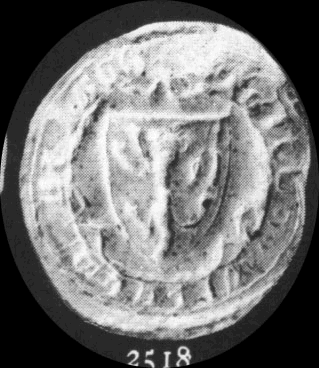 1340
- Seal
- William Utlage , - Used by Robert of Durham,
merchant.- Inscription: SIGILLVM WILELMI VTLAGE - Seal
design: Round, armorial, a lion rampant. - pdf
- Robert
of Durham 1321 - Master of Monkwearmouth - This is also
the Symbol of Scotland - The earliest recorded use of the Lion
rampant as a royal emblem in Scotland is by Alexander
II in 1222 1340
- Seal
- William Utlage , - Used by Robert of Durham,
merchant.- Inscription: SIGILLVM WILELMI VTLAGE - Seal
design: Round, armorial, a lion rampant. - pdf
- Robert
of Durham 1321 - Master of Monkwearmouth - This is also
the Symbol of Scotland - The earliest recorded use of the Lion
rampant as a royal emblem in Scotland is by Alexander
II in 1222
|